
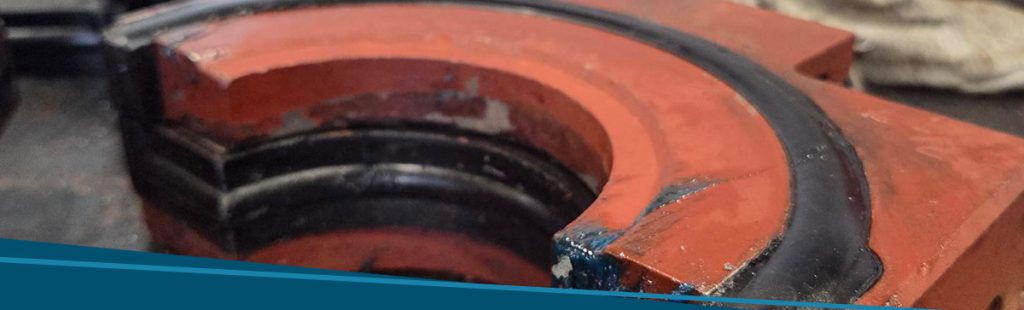
If you work in oilfield pressure control, well servicing, or workover operations, you have likely run into a frustrating paperwork headache. You need to order replacement ram rubbers for a square-body blowout preventer (BOP), but everyone on the rig calls the part something completely different.
One hand tells you to order a Shaffer Sentinel II. The tool push calls it a Townsend Type 81. Your purchasing agent insists it is a WSI Duke style, and your aftermarket distributor lists it as a Universal fit.
Here is the truth: They are all talking about the same piece of rubber.
Understanding the history behind these confusing names, how they are used, and why companies like CPP Distribution now offer universal solutions can save you time, eliminate ordering errors, and cut rig downtime.
The Naming Concept Breakdown
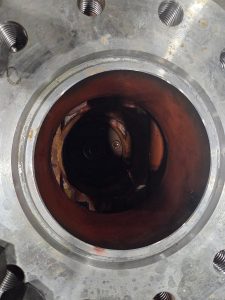 The names differ simply because different companies manufactured the metal box the rubber sits in:
- Sentinel II: The original brand name created by Shaffer (OEM) for their compact, square-body hydraulic BOP.
- Townsend: The company name of an aftermarket manufacturer that built clones of the Shaffer design.
- Type 81 (T-81): The model designation Townsend gave to their clone of the Sentinel II.
The Analogy: Shaffer built the original “Ford Mustang” (Sentinel II). Townsend built an identical aftermarket replica and named it the “Type 81.” The parts are 100% interchangeable.
100 Years of Oilfield History
The multi-name confusion is rooted in a century of corporate acquisitions and expired patents:
- The Shaffer Origin (1920s–1970s): Shaffer Tool Works invented the compact Sentinel BOP line for workover and well-servicing rigs.
- Corporate Mergers: Shaffer was bought and rebranded repeatedly (Rucker Shaffer, NL Shaffer, Varco Shaffer, and finally NOV). Crew members began calling the rubbers by whatever era their rig’s stack belonged to.
- The Rise of Clones: When Shaffer’s patents expired, Townsend International built an exact geometric replica of the machine and called it the Type 81. Other companies like Western Stationers (WSI Duke) and Alberta Petroleum Industries (AP SWD) built their own versions of this exact same square-body footprint.
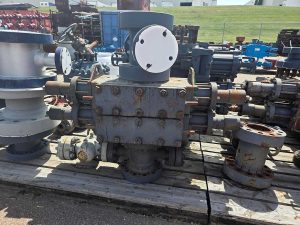
What They Do & How They Work
- High-Pressure Sealing: These are sacrificial, consumable elastomer components installed inside BOP ram blocks to seal off high-pressure oil, gas, or drilling fluids.
- Ram Variations: They are used as Pipe Rubbers (sealing around the drill string) or Blind Rubbers / CSO (sealing against each other to close an empty wellbore).
- Hydraulic Compression: Rig hydraulics force the steel ram blocks together, squeezing the rubber element until it deforms to create a gas-tight seal.
Why Size Overrules Brand
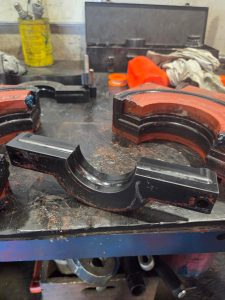 Because the internal ram cavity inside a 7-1/16″ Shaffer Sentinel II is structurally identical to a 7-1/16″ Townsend Type 81 or WSI Duke, the brand name on your BOP does not matter. The functionality and dimensions are exactly the same.
To order a universal replacement part, you only need three specifications:
- BOP Nominal Bore Size: The internal diameter of your BOP (most commonly 7-1/16″ or 9″).
- Ram Configuration: Whether you need Blind (CSO) or Pipe/Tubing rubbers.
- Pipe OD(If Tubing): The exact outer diameter of the pipe you are running (e.g., 2-3/8″, 2-7/8″, or 3-1/2″).
By focusing on dimensional sizing rather than restrictive legacy brand names, operators streamline their supply chain and ensure total cross-compatibility across their entire fleet.